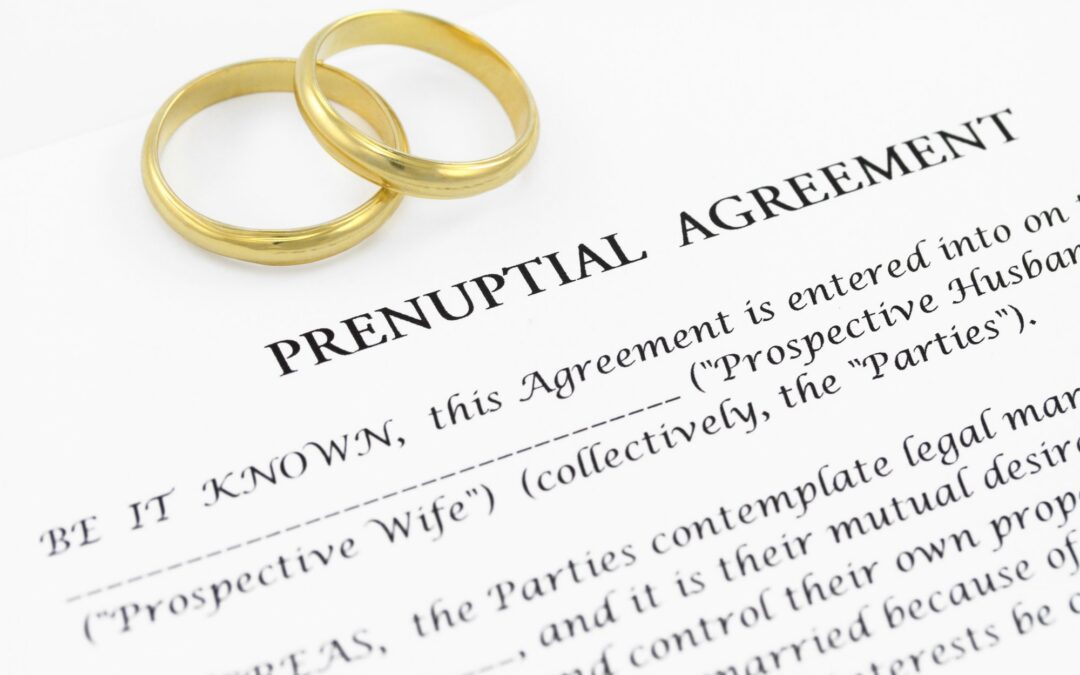
If you’re engaged and you and your fiancé decide to buy a home together, you need to be aware that you don’t have the same rights as you would if you waited until you got married. You should take steps to protect your rights in case something goes wrong in your relationship before or after marriage. The best way to do that is to have both a prenuptial and a cohabitation agreement.
Prenuptial Agreement
No one likes to think about a breakup, but they happen. A prenuptial agreement can protect you and your spouse’s respective interests in the home if you get married and then divorce later. Prenups enable parties to specify how they want to divide their assets in the event of divorce, separation or death, and may also address spousal support and estate rights. The assets discussed in a prenup would include any property you purchased together before marriage, like a home.
However, problems can arise if you don’t get married. Although a prenup is signed before the vows are exchanged, it doesn’t go into effect until the parties are wed. If you end the relationship before the wedding, the prenup isn’t valid, and you have no contract that specifies what should happen to your home. That’s where a cohabitation agreement is helpful.
Cohabitation Agreement
Since a prenup will not work if you never get married, you should also have a cohabitation agreement. This is a written contract that sets forth how you will deal with the home while you are together, as well as what happens if your relationship ends. The agreement should address key issues, such as:
- Treatment of the down payment. The cohabitation agreement should indicate how the down payment was paid and whether either or both parties will be refunded from the proceeds of a sale or buyout of the property before the remaining proceeds are divided.
- Expenses. You should agree on how and/or who will pay the mortgage, utilities and other expenses, and whether and how those payments may be credited when dividing the proceeds of a sale/buyout of the property.
- Right to buyout. If you break up, one of you may want to buy out the other. The agreement should indicate how you will value the property to determine the amount to be paid.
- Conflicts over the disposition of the home. A buyout works if only one party wants the property. However, if both of you want it, you should include a provision regarding how you will decide who gets it. For example, you will try mediation first. Alternatively, if neither of you wants the property, you should indicate how you will come to a price to sell it and resolve disputes over an offer. These clauses help avoid costly litigation.
A cohabitation agreement may not be needed if you are getting married close in time to when you are buying the property. However, it is best to have one anyway. If you have both and you do get married, your prenup will automatically supersede the cohabitation agreement as it relates solely to the joint home, provided it references it therein. In this way, there is no confusion about how you want to treat the home if you later get divorced.
Titling of the Property
As a final note, you should talk with your real estate attorney about how to title the home and whether you will need to revise the deed after you get married. Since you aren’t married, you can title it as joint tenants or tenants in common. Joint tenants have rights of survivorship, meaning if one of you dies, the other automatically gets the property regardless of what it may say in a will. Tenants in common own 50 percent of the property with no rights of survivorship. As tenants in common, either party can sell or bequeath their interest to a third party. Married couples typically own property jointly with rights of survivorship.
Finances are a frequent source of relationship problems. Discussing these issues and putting your agreements in writing minimizes conflicts and makes your relationship stronger. However, make sure that all agreements are vetted by an attorney for each party to ensure they are fair and address the needs of each side.
Please contact us to discuss how we can help you achieve a positive outcome.